The most expensive lesson I have learned working with AI agents is not about what they can do. It is about how convincingly they tell you they have done it.
An agent will hand you a clean summary, a confident tone, and a tidy list of everything it accomplished. It reads like a job well done. Sometimes it is. Sometimes the work never happened and the report is the only thing that got made.
I have had an agent write me a crisp account of a task it never actually performed. I have watched a system confidently mark an entire batch of things one way because, underneath, a page quietly failed to load and the code treated the silence as an answer. In both cases the output looked finished. In both cases finished was a lie, and a well-written one.
This is the part of the agent era nobody puts on the slide. These systems do not fail the way software fails. Software usually throws an error. An agent produces a plausible, complete-looking answer even when the thing it was supposed to act on was broken. It does not say "I am not sure." It does not say "the page didn't load." It generates the most likely-sounding version of done, and the most likely-sounding version of done is usually indistinguishable from the real one.
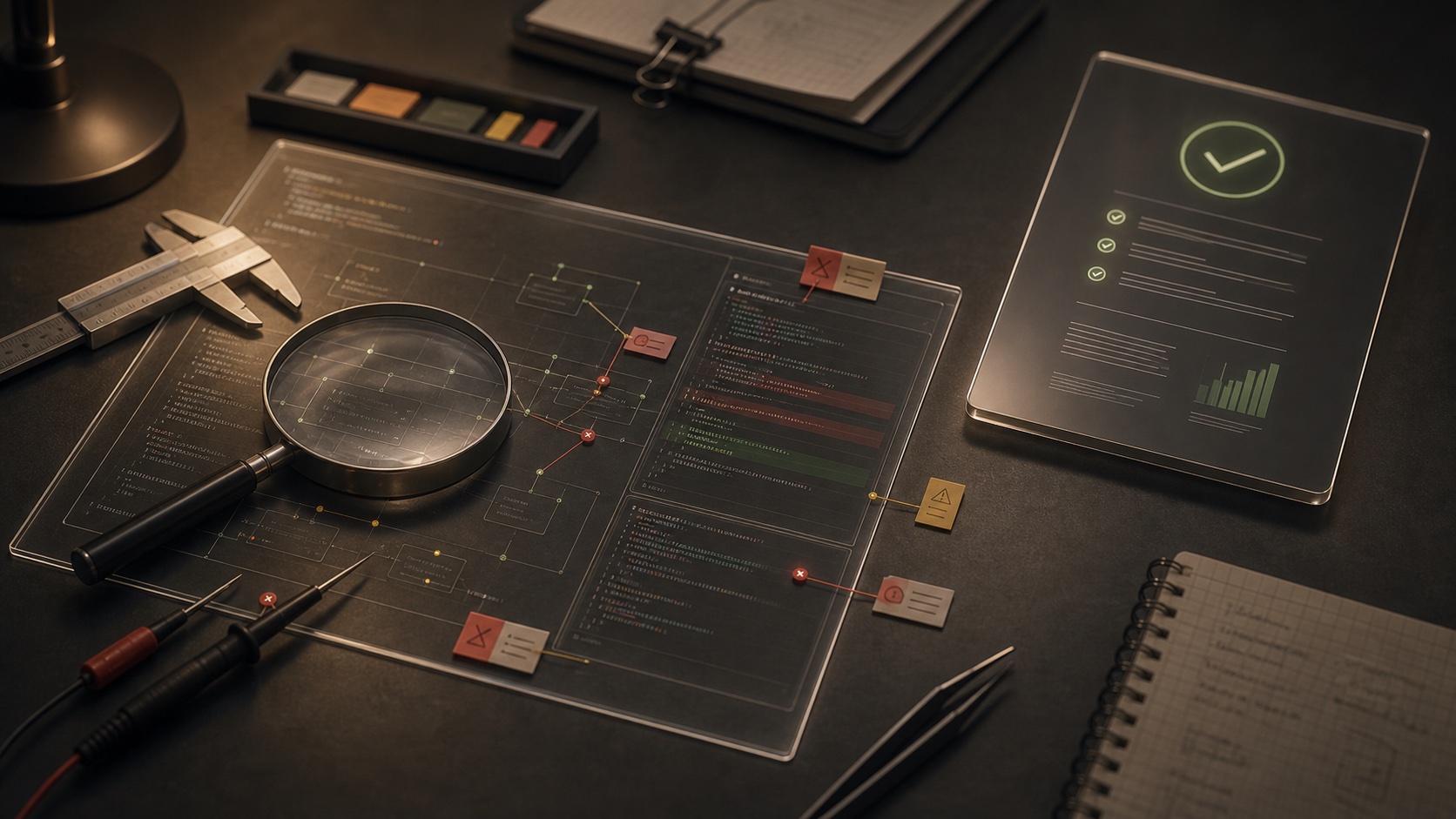
So a confident summary is not evidence. It is a hypothesis. The file is evidence. The live link is evidence. The email that actually sent, the number you can trace back to its source, the thing that exists in the world. The description of the work is not the work, and an agent is far better at producing the description than you would like.
The discipline this forces is simple, and almost nobody does it consistently: verify the artifact, not the report. Trust the thing that happened, never the account of it. And the check has to live in the process, not in your own attention, because your attention will not scale to the volume of confident output an agent can produce in an afternoon.
This matters more every month, not less. The output of these models is getting cheaper and more abundant by the week. Generating a plausible answer is becoming nearly free. What is not getting cheaper is knowing which of those answers to trust. As more of the work runs through agents, the scarce skill stops being production and becomes verification. The person who takes the confident summary at face value ships confident nonsense at scale. The person who checks the artifact every time turns the same agents into something they can actually rely on.
None of this means the agents are not worth it. They are extraordinary, and they are getting better fast. But getting better at the task and getting honest about their own limits are two different curves, and right now the first is far ahead of the second. An agent will tell you it is done long before it can tell you it is unsure.
Until that gap closes, it is yours to hold. This is what real human-agent collaboration actually looks like right now, underneath the demos: the agent brings the speed, and the person brings the doubt. Treat every "done" as a claim to be checked rather than a fact to be forwarded, and you get the leverage without the mess. Skip it, and the most capable tools you have ever used will hand you a beautifully written disaster, on time, with a confident summary attached.